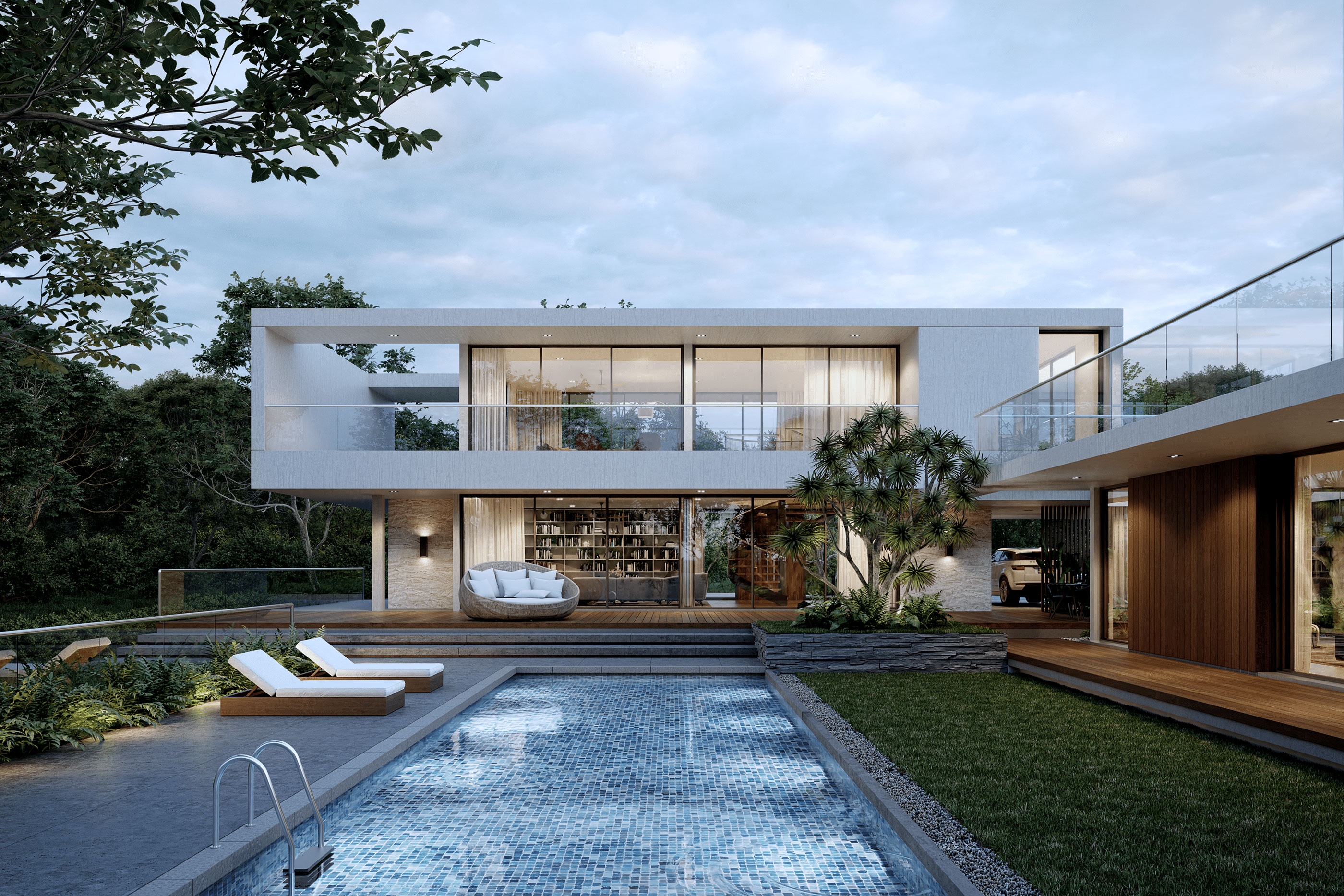
Villa landscape design in Jeddah starts with three things a Riyadh garden rarely deals with: humid heat that stays heavy after sunset, salt air from the Red Sea that eats into metal, and ground that can be sandy, salty or wet a metre or two down. Get those right and the garden becomes the family's evening room for most of the year. If you are looking for a landscaping company in Jeddah that designs and builds, NoVi Designs and Finishing designs villa gardens in 3D for Jeddah homeowners, with shade, irrigation, planting, pools, lighting and outdoor majlis seating in one set of drawings. Our Saudi branch is in Al Olaya, Riyadh, supported by our design studio in Cairo, we take on villa projects in Jeddah, and the same team can carry the work through execution and site coordination.
Planning a garden for your Jeddah villa? Book a site visit, or send the plot plan and a few photos on WhatsApp +966 54 346 1981 first.
Why a Jeddah garden is a different brief from Riyadh
Riyadh gardens are designed against dry heat and dust. Jeddah is hot as well, with long-term July highs averaging around 39 degrees Celsius, but the air carries far more moisture. The annual average relative humidity is around 60 percent, it peaks in September and October, and summer dew points often pass 27 degrees. Rain is rare, around 60 mm a year, yet it can arrive as a sudden winter storm. That changes the design priorities:
- Moving air as well as shade. In humid heat a closed, still corner feels worse than an open one. We keep pergolas and seating open to the prevailing breeze, use louvres instead of solid roofs where possible, and plan outdoor fans and power points from day one.
- No extra moisture where people sit. Misting systems that work in dry Riyadh air can make a Jeddah jalsa feel damp. We prefer fans, shade and water features placed downwind of seating.
- Materials that dry fast. Paving that drains, decking with gaps and ventilation underneath, outdoor fabrics that do not hold water, and cushion storage that breathes.
- Drainage that works on a bad night. Falls, channels and outlets sized for a heavy downpour, because a soakaway alone may not cope where the ground is already wet.
- Evening use. Families tend to sit out after sunset, so lighting, fans and insect-aware planting placement are designed together.
Salt air and the Red Sea: metals, fixings and finishes
Salt is the quiet cost in a Jeddah garden. Chlorides carried on the sea breeze attack exposed metal, and the closer the villa is to the water, in Obhur or near the Corniche, the faster it shows. Grade 304 stainless steel has no molybdenum and can pit and stain in coastal air, while grade 316 contains around 2 to 3 percent molybdenum and resists chloride attack far better. Even 316 can pit in tight gaps under washers and in fastener threads if salt is left to build up, which is why the care guide includes a rinse. Mixing metals matters too: stainless screws in aluminium can make the aluminium around them corrode faster in salty air unless the joint is isolated.
| Element | What fails near the sea | What we specify for Jeddah |
|---|
| Railings, gates, pool ladders, balustrades | Rust spots and brown tea staining on standard steel and grade 304 | Grade 316 stainless or powder-coated aluminium, with a simple rinse routine in the care guide |
| Pergolas and shade frames | Coating failure at cut edges, welds and fixings | Powder-coated aluminium, or hot-dip galvanised and coated steel where steel is structural, with sealed cut edges |
| Screws, anchors and brackets | Fixings that rust before the frame does | Stainless or coated fixings matched to the frame metal, with insulating washers between stainless and aluminium |
| Outdoor lighting and sockets | Corroded housings and tripping circuits | Fittings with suitable ingress protection for outdoor use, cables in ducts, and junction boxes above any likely water level |
| Timber and furniture | Swelling, grey staining and loose joints in humid air | Dense hardwoods or composite decking with ventilation underneath, and outdoor-rated fabrics |
The right grade depends on how far you are from the water and how exposed each element is, and the BOQ shows where the coastal specification adds cost so you can decide line by line.
What is under the garden: sand, sabkha and groundwater
Parts of Jeddah sit on coastal ground that behaves differently from inland soil. A study of the central part of the city by Abu Hajar and Hossain, published by King Abdulaziz University in 1991, recommended protecting foundation concrete against sulphate attack and steel against chloride corrosion. A 1999 study of the Al Nekhaila sabkha south of Jeddah found saline to brine groundwater between 1 and 2.5 metres deep and soil that causes geotechnical problems when wet. In the early 2000s Jeddah municipality was also dealing with a rising water table, and many new construction projects needed their foundations pumped dry before work could start. For a villa garden this means:
- Soil and groundwater checks before a pool. A pool shell, a basement plant room or deep footings for a large pergola should follow the structural engineer's advice for your plot, which may include sulphate-resistant concrete and waterproofing against groundwater.
- Imported planting soil. Salty or compacted native ground is replaced or improved in planting pits and beds, often with raised planters where the water table is high.
- Drainage under the planting. Gravel layers and drains so roots do not sit in salty water after heavy watering or rain.
- Root barriers near walls and pipes. Trees that chase water can damage boundary walls, paving and services, so we place them with distance and barriers.
We do not guess the ground. If there is no recent soil report for your plot, we tell you at the site visit which parts of the design need one.
Garden design for a Jeddah villa, space by space
| Space | Typical use | What to design for in Jeddah |
|---|
| Front setback and entrance | Arrival, parking, the guest entrance to the majlis | A shaded route from the car to the guest door, car shades that suit the facade, salt-tolerant planting and arrival lighting |
| Majlis courtyard | Outdoor seating for guests, coffee service, winter evenings | A jalsa linked to the majlis door, open to the breeze, with fans for warm nights, a service route from the kitchen and privacy from the family garden |
| Family garden and pool | Pool, children's play, family dinners, barbecue | Shade over the pool edge and play area, screening from neighbours, fast-draining surfaces and coastal-grade pool fittings |
| Side passages | Service access, AC units, tanks and pumps | A tidy, ventilated home for equipment, with access for maintenance and drainage away from the house |
| Roof terrace | Evening seating with the sea breeze | Screens against overlooking, lightweight planters, waterproofing and drainage under every planted area, wind-rated shade |
Jeddah districts and what their gardens ask for
We have not published projects in these districts. This is what gardens in each of them typically ask for:
- Obhur North chalets and sea-facing villas: the highest salt exposure, gardens used at weekends and then closed, so planting must survive on an automatic schedule and every metal item needs a coastal grade.
- Al Shati, Al Zahra and Al Hamra: established districts close to the Corniche. Older gardens here often need rusted pergolas and railings replaced, and more privacy from taller neighbouring buildings.
- Al Naeem and the northern villa districts: larger family villas where the majlis courtyard, the pool and the family garden need clear separation.
- Al Rawdah: a central district with older villas, mature trees worth keeping, and irrigation and drainage that usually need replacing.
Plants that cope with Jeddah's coast
The Ministry of Environment, Water and Agriculture (MEWA) publishes a list of native plants suited to gardens, streets and courtyards. Several of them suit a coastal villa garden in Jeddah:
- Athl (Tamarix aphylla): a tough shade and windbreak tree that tolerates saline conditions, useful along boundaries on exposed plots.
- Arak (Salvadora persica): listed by MEWA for garden fences and barriers, good as a dense screen.
- Sidr (Ziziphus spina-christi), ghaf (Prosopis cineraria) and sayal (Acacia raddiana): native shade trees with modest water needs.
- Date palms: the classic choice for structure and shade near seating and pools.
- Colour: bougainvillea on walls and pergolas and sun-tolerant flowering shrubs, placed where salt spray is lower.
Avoid invasive species. Under the penalty schedule of the National Centre for Vegetation Cover Development and Combating Desertification, growing invasive plants is fined per tree or shrub, from SAR 1,000 for a first offence rising to SAR 10,000 for a third, so we check the final plant list against current guidance and what Jeddah nurseries actually stock. Planting usually goes in during the cooler months so new trees settle before their first summer.
Natural grass, artificial turf or no lawn
A lawn is the thirstiest part of any garden and, near the sea, it also suffers from salty water and soil. Many Jeddah owners now keep a small natural lawn on its own irrigation zone with good drainage under it, use artificial turf in shaded play areas, and give the rest to gravel, planting beds and paving. Turf gets very hot in direct sun and holds moisture underneath if drainage is poor, so we detail the base and drainage as carefully as the surface.
Water: desalination, tariffs and irrigation design
Jeddah drinks the sea. A 2020 study by Al-Juaidi and Al-Shotairy of King Abdulaziz University found that desalinated water from two plants provided about 95 percent of the city's supply in 2017. Every litre that goes onto a lawn has been desalinated, pumped and stored, and your bill reflects it. The National Water Company bills homes in tiers by monthly consumption, and press reports of an NWC announcement in late October 2026 say a revised residential tariff takes effect from 1 January 2027. Check the current tables on the NWC website before you size the garden's water use. We design irrigation around that reality:
- Drip lines for trees, shrubs and beds, and subsurface drip where a lawn is kept, instead of sprinklers that wet paving and lose water to the wind.
- Zones by water need, so palms, shrubs and lawn are never watered on the same schedule.
- A smart controller with seasonal programmes and early morning or night watering, and remote access for chalets that stay closed.
- Filters, flushing points and access boxes a gardener can reach without digging, because salty water and sand clog emitters faster.
- A tank and pump sized for the garden, fed from the villa supply, so irrigation does not drain the house tank on a hot day.
Treated wastewater sometimes comes up as an option for garden irrigation. Supply to a private villa and the rules for using it are set by the authorities, so check with them before planning around it.
Shade, pools, outdoor kitchens and lighting
Shade for humid heat
Louvred aluminium pergolas, open timber or composite frames, canopies and tensile shades, placed against the afternoon sun and open to the breeze. Every structure is checked for wind, because storms off the sea can load a shade sail hard, and foundations, fan points and lighting are shown in the shop drawings.
Pool or plunge pool
Position, partial shade, deck material and plant room are set against the sun path and the groundwater conditions. Plant rooms need ventilation, because pumps and dosing equipment corrode fast in damp, salty air.
Outdoor kitchen and barbecue
Grill, sink and counters need water, drainage, power and sometimes gas, routed under the paving first, in stainless grades that suit the coast, and placed so smoke clears the majlis and the neighbours.
Lighting
Paths, trees, water and seating on separate circuits, agreed in 3D night views, and linked to your smart home system if you have one, which also lets you run irrigation and lights while a chalet is empty.
Storms and drainage
Jeddah gets little rain, but when it comes it can be severe. On 25 November 2009 more than 70 mm fell in four hours and the floods that followed killed more than 120 people. A villa garden is not flood defence, but it should never send water toward the house. We check finished levels against the street and the plot, set falls away from doors and the majlis, add channel drains at entrances and garages, and keep electrical boxes and pool equipment above likely water levels.
Permits and approvals
Some garden works need municipal approval. Car shades, boundary walls, new annexes and larger structures may need a permit through the Balady platform, depending on their size, type and position on the plot. Requirements change, so check the current requirements on Balady and with Amanat Jeddah before the design is final. Developer communities in north Jeddah and Obhur usually need their own approval too. We prepare the drawings and agree upfront who submits each item.
Building with the villa, or adding a garden later
Garden and finishing together. The best moment. Irrigation sleeves, lighting cables, pool pipes, drainage and gas routes go in before the paving, under one set of drawings and one BOQ. If you are finishing the house too, see our villa finishing in Jeddah page, which covers the coastal specification indoors, and our interior design in Jeddah page.
An existing villa. Very doable. The limits are access for materials, protecting finished floors and facades, and service routes that were never left. In older villas we often start by replacing rusted metalwork and failed irrigation before anything new goes in.
Outdoor work also follows the summer midday ban on work in direct sun. In 2026 the Ministry of Human Resources and Social Development applied it from 15 June to 15 September, between 12:00 and 15:00. In Jeddah's humidity, summer site work is slower anyway, so we plan heavy works and planting for the cooler months.
What drives the cost
A price per square metre says little about a villa garden. The main cost drivers in Jeddah are:
- The balance of hardscape to planting.
- A pool or plunge pool, and what the ground and groundwater require under it.
- Soil replacement, raised planters and drainage layers.
- The coastal specification for metals, fixings and lighting.
- The number and type of shade structures, and fans.
- An outdoor kitchen and the services it needs.
- Irrigation zones, tank, pumps, filters and the controller.
- Mature trees and palms versus younger planting.
- Stone, pavers and decking materials.
We do not publish price per square metre figures. You receive an itemised BOQ after the site visit and design, with design separated from execution, so you can adjust the scope line by line.
Our process
- Site visit: levels, orientation and breeze direction, distance to the sea, existing trees, tanks, pumps, AC units, signs of salt damage and drainage problems.
- 3D concept: majlis side, family side and roof, with materials, plants and day and night views.
- Detailed drawings: setting-out, paving and pergola details, irrigation, drainage, electrical layouts, the coastal metal schedule and a plant list.
- Execution: drainage, hardscape, pool and structures first, planting last, with site checks against the drawings.
- Handover: systems tested, a seasonal watering schedule and a first-year care guide that includes rinsing metalwork and flushing irrigation filters.
Our landscape work
Our completed villa garden is the Neom October villa landscape in 6th of October City, Egypt, designed in 3D and executed on site by NoVi, with a plunge pool, water walls, pergolas, a fire pit and an outdoor kitchen. We also designed the landscape for a 9,000 m² residential compound in New Cairo, covering the residential area and clubhouse, pool and pergola design and shop drawings (design only).
In Saudi Arabia our case studies are design-only commissions. The closest to a garden brief is Dammam Palace, where NoVi designed the landscaped entrance of a private family palace as well as its interiors and facade. We have not published a Jeddah garden case study yet. See our wider landscape design portfolio, the landscape design and external works service and our residential design and build services.
What to prepare for the site visit
- The plot plan and villa drawings, ideally with finished floor levels, and any soil report you have.
- Photos of the garden, courtyard and roof at different times of day, and close-ups of any rust or damp.
- How you want to use each space: majlis seating, pool, play, barbecue, roof evenings.
- Where the tanks, pumps, AC units and gas supply sit, and trees you want to keep.
- Community guidelines, if your villa or chalet is in a managed community.
Book a garden site visit in Jeddah
Send your plot location, drawings and a few photos, and we will come back with a clear plan. Book a site visit or request a proposal, or call or WhatsApp +966 54 346 1981, Sunday to Thursday, 10:00 to 18:00 Saudi time.
Related